Private equity refers to investment capital that is not publicly traded on stock markets, but is instead made available to select investors, typically through private funds or investment firms. Private equity firms provide financing to companies that are not publicly traded, with the goal of achieving a significant return on investment through the eventual sale or initial public offering (IPO) of the company.

Private equity firms typically invest in early-stage or mature companies that have a proven track record of success or have high growth potential. They provide capital in exchange for ownership equity and often take an active role in the management and growth of the companies they invest in.
Private equity investment is typically considered to be higher risk than traditional forms of investment, such as stocks and bonds, but it also offers the potential for higher returns. Private equity firms often look for companies that are undervalued or in need of operational improvement, and aim to increase the value of these companies over time through strategic investments and operational changes.
Overall, private equity is a significant source of investment capital for companies and can play a key role in financing the growth and development of businesses. However, it is important for companies to carefully consider the terms and conditions of private equity investment, and to seek expert advice to navigate the complexities of the process.
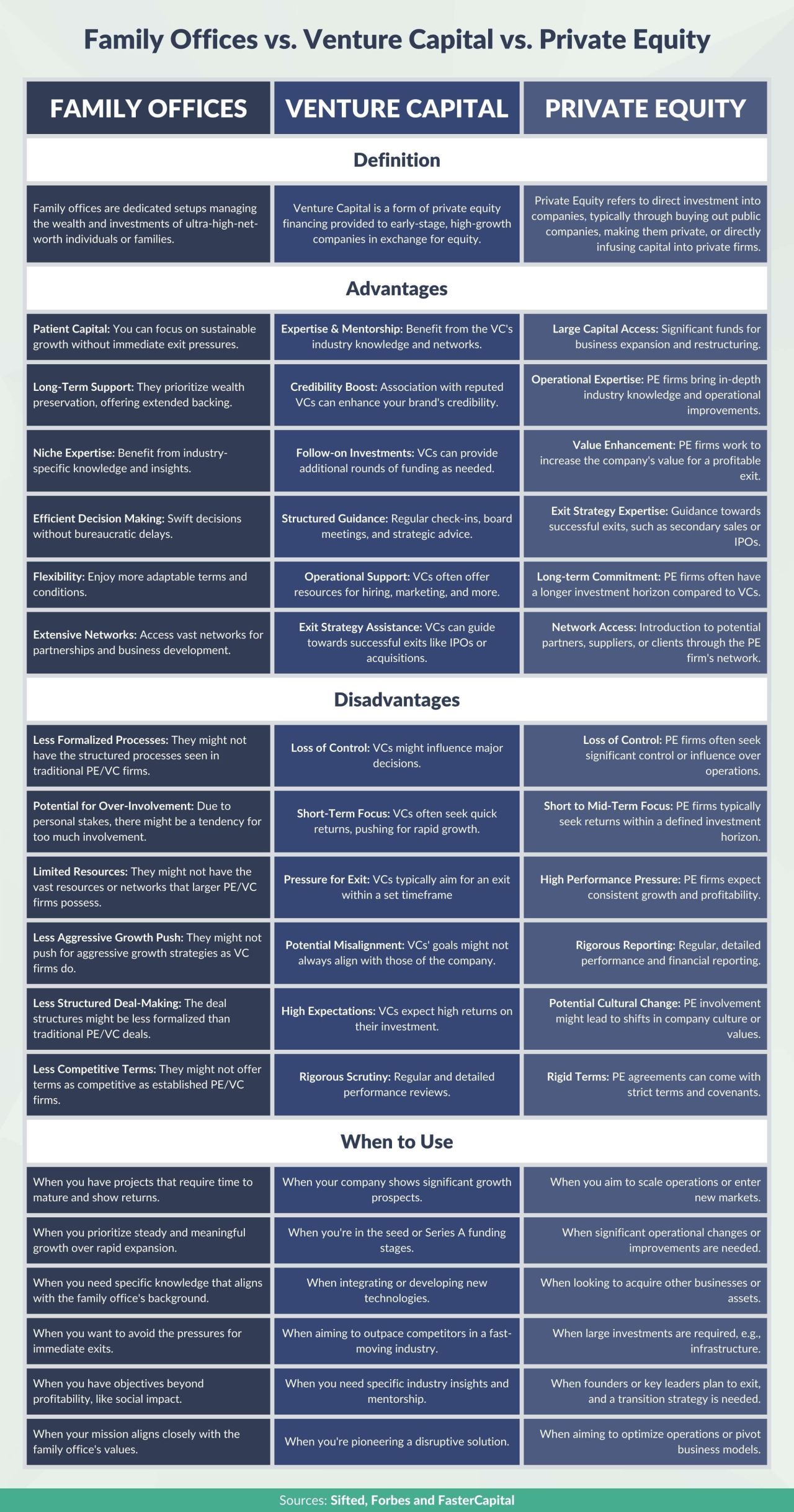
Recent trends in private equity include:
- Increased competition: The low interest rate environment has led to an increase in competition for private equity investment opportunities, as investors seek to achieve higher returns.
- Focus on technology: Private equity firms have been increasingly active in the technology sector, seeking to invest in and acquire innovative and fast-growing companies.
- Growth of alternative investment strategies: Private equity firms are increasingly exploring alternative investment strategies, such as growth equity, venture capital, and impact investing, to diversify their investment portfolios.
- Rise of direct investments: Private equity firms have been making more direct investments in companies, bypassing the traditional fund structure in order to have more control over the investment process.
- ESG considerations: Environmental, social, and governance (ESG) considerations are playing an increasingly important role in private equity investment decisions, as investors seek to align their investment portfolios with their values and beliefs.
- Expansion into new markets: Private equity firms are increasingly seeking investment opportunities in emerging markets, as they look for new sources of growth and returns.

Overall, private equity continues to play a significant role in financing the growth and development of businesses, and private equity firms are adapting to changing market conditions and evolving investor preferences in order to achieve their investment objectives.
